
We use cookies on our website. Cookies help make the website more user-friendly, efficient, and secure.
Please select your cookie preferences
Strictly necessary cookies are cookies required for the website to function and provide the basic information requested by the website user. These cookies are not used for tracking users.
YouTube cookies allow the playback of YouTube videos directly on our website. When YouTube cookies are used personal data or connection information, such as the IP address, may be transmitted to YouTube. By accepting YouTube cookies, you consent to the transfer of this data to YouTube. Please see our privacy policy for more information.

Global competition in the development and deployment of advanced digital technologies is intensifying. The growing technology gap, especially in the field of artificial intelligence, critical digital infrastructures and data services, causes increasing dependencies on non-European providers, leading to risks related to data security and technological sovereignty. At the same time, gaps in innovation capacity and scale threaten Europe’s long-term economic competitiveness. Without decisive action, Europe risks undermining its ability to safeguard its data, maintain economic competitiveness in key strategic sectors and build a digital future based on its core values. Falling behind in the global technology race would also mean limiting Europe’s ability to address societal challenges and ensure sustainable and inclusive growth.
It is thus essential to strengthen Europe’s capacity in advanced digital technologies, artificial intelligence, quantum technologies, and digital infrastructures, ensuring that European leadership in these fields is maintained. By fostering research, development, and application of these technologies, Europe can build a robust and interconnected ecosystem that supports key impact sectors, including healthcare, transportation, manufacturing, agriculture, climate and environment. Ultimately, coordinated investment and research in these domains will allow Europe to leverage advanced technologies to address societal challenges, improve public services, and drive sustainable and inclusive economic growth.
Our innovation ecosystem QUANTUM & DIGITAL INFRASTRUCTURES brings together diverse stakeholders — from academia and industry to policymakers — to foster open innovation and accelerate the uptake of cutting-edge technologies. This includes supporting large-scale European projects in areas such as quantum technologies, trustworthy AI, and next-generation digital systems.

Advanced digital technologies comprise modern, data-driven and highly interconnected solutions. By combining artificial intelligence, high-performance computing, and advanced data infrastructures, these technologies are driving breakthroughs in domains such as healthcare, the built environment, and environmental systems. However, despite their transformative potential, the development and deployment of these systems remain complex, fragmented, and resource-intensive, limiting their scalability and accessibility across domains. In this context, initiatives such as AIGENT aim to establish a pan-European, domain-agnostic digital twin infrastructure that enables the efficient creation, orchestration, and scaling of trustworthy twins across multiple sectors.
The projects in our portfolio focus on enabling these breakthroughs at scale: building robust infrastructures, supporting responsible and trustworthy AI, and advancing cutting-edge technologies that unlock new capabilities across industries. By bridging research, engineering, and real-world deployment, we help turn emerging innovations into practical, high-impact solutions.

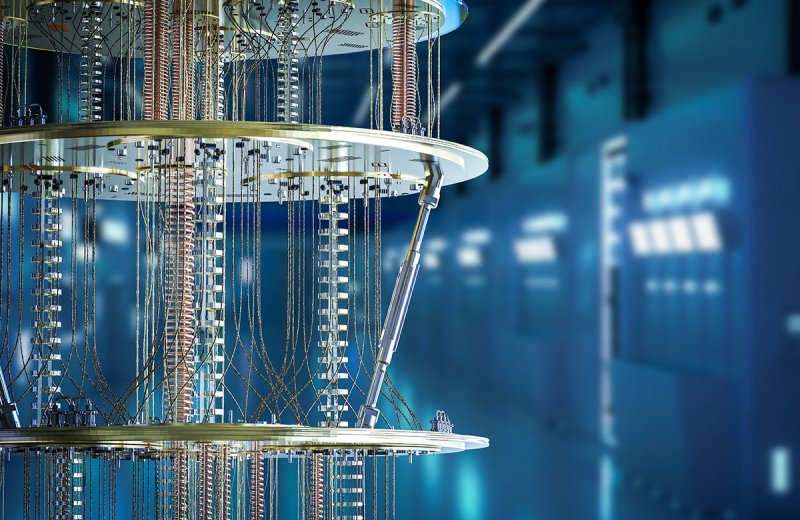
Quantum technologies are used when conventional technologies reach their limits. They include four main areas: quantum computing, simulation, sensing, and communication, each at a different stage of maturity. Some of these technologies are already finding practical use. For example, quantum communication enables extremely secure data transmission, while quantum sensing allows highly precise measurements that can improve areas such as navigation, healthcare, and environmental monitoring. Quantum simulation is becoming an important research tool, helping scientists better understand complex systems like new materials or chemical processes. Quantum computing, is still in an early phase but holds the promise of tackling problems that are far beyond the reach of today’s computers. Together, these technologies are laying the groundwork for a new generation of solutions that could significantly impact science, industry, and everyday life.
Europe plays a leading role in the development of quantum technologies, particularly through strong public investment, coordinated research initiatives, and a thriving start-up ecosystem. Our research projects will underline Europe’s leadership in quantum technologies, advancing technological sovereignty and global competitiveness.
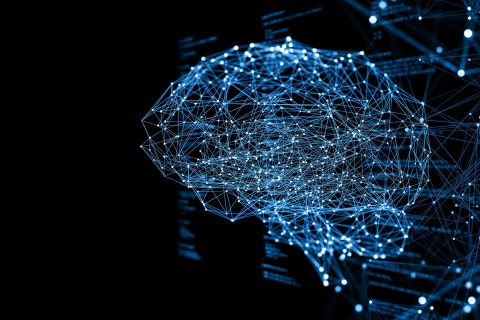
The development and advanced application of Artificial Intelligence is key to economic competitiveness, technological sovereignty, and societal resilience. By building an ecosystem of AI factories, data infrastructures, and computing capacity, Europe underlines its goal of becoming a global leader in the development of responsible AI systems. This is key to retaining control over critical data and ethical standards, while also supporting innovation across key sectors like healthcare, manufacturing, energy, and public services.
Our European research projects enable the development of trustworthy AI aligned with EU values such as privacy, transparency and safety. A coordinated European approach will strengthen industrial leadership and ensure that European businesses have access to advanced tools and infrastructure needed to compete globally.

High Performance Computing uses supercomputers to process enormous amounts of data and to carry out complex calculations that are intractable for classical computers. HPC enables breakthroughs in high-resolution climate modelling, accelerated drug discovery, advanced materials for clean energy, and large-scale simulations in fields ranging from health to astrophysics. To fully harness the transformative potential of advanced computing, Europe is developing a robust and interconnected network of digital infrastructures and facilities, which build the technological foundation that enables storage, processing, transmission, and secure use of digital data and services. These infrastructures are the backbone for developing and applying advanced digital technologies, including AI and quantum applications, and will be made accessible to businesses and researchers via platforms such as the JUPITER AI Factory.
We support Europe in developing groundbreaking digital infrastructure, crucial to ensure technological independence, protect sensitive data, support innovation across industries, and enable equal access to digital capabilities for research institutions, businesses, and public services.

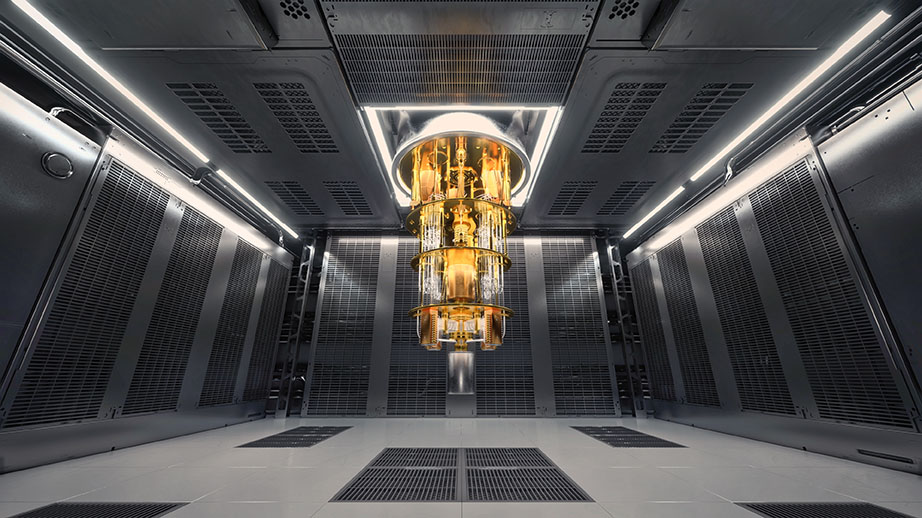


Discover how our projects advance quantum technologies and digital infrastructures, enabling secure, high-performance computing and data ecosystems that drive real-world impact and strengthen Europe’s technological leadership.