 Quantum & Digital Infrastructures
QSOLID
Quantum Computer in the Solid State



At a Glance
- Develop a high-performance quantum computer with a low error rate
- Error mitigation through cutting-edge software and hardware
- Contributing to Germany’s technological competitiveness in the quantum era

© Institute for Functional Quantum Systems / Forschungszentrum Jülich / Sascha Kreklau
Redefining Performance Standards in Quantum Computing
Achieving quantum advantage depends critically on reducing error rates, one of the most fundamental barriers to practical quantum computing. Quantum states are sensitive to external disturbances such as heat and electrical noise, making isolation from the environment essential. The QSolid consortium addresses this challenge by developing cost-effective room-temperature electronics, optimising cryoelectronics, and advancing cryogenic control systems to minimise premature disruption of quantum states.
By prioritising error mitigation over mere scaling, QSolid positions itself differently in the global race for high-performance quantum computing. Besides enhancing stability and reliability of qubits, the project’s approach also lays the foundation for stable quantum systems. Consequently, QSolid is strengthening Germany’s position in the global quantum landscape, setting new standards and benchmarks for performance and efficiency.
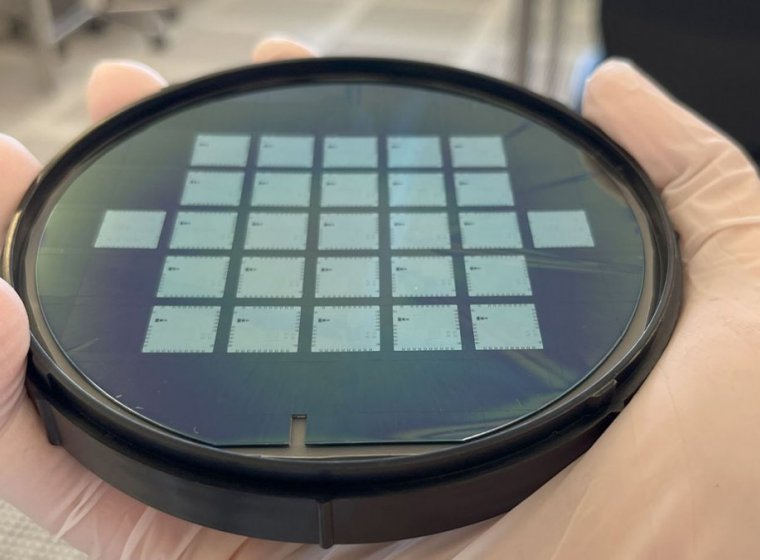
© Institute for Functional Quantum Systems / Forschungszentrum Jülich / Yebin Liu
Quantum Computer in the Solid State
QSolid is tackling error susceptibility of quantum computers on different levels: By combining high-precision manufacturing, novel material systems, optimised qubit control, and AI-based error mitigation, the project advances qubit performance and stability. The development and testing of next-generation superconducting processors, together with benchmarking platforms and user access via the JUNIQ high-performance computing infrastructure at Forschungszentrum Jülich, enable continuous validation under real-world conditions and pave the way toward reliable, large-scale quantum computing.
The quantum computer developed within QSolid contains a next-generation superconducting quantum processor, an application-specific system designed to perform quantum calculations for industry, and a benchmarking platform that prioritises the development of digital twins and industry standards. By integrating these systems into the existing supercomputing environment at Forschungszentrum Jülich, QSolid fosters hybrid quantum-HPC architectures capable of solving complex problems more efficiently.