
Quantum technologies are rapidly emerging as a cornerstone of Europe’s scientific and technological future. Built on the principles of quantum mechanics, these technologies go beyond the limits of classical approaches, offering new ways to compute, measure, and communicate. While often grouped together, the quantum field consists of several distinct but interconnected domains: quantum computing, quantum simulation, quantum sensing, and quantum communication.
While they are at different stages of maturity, from technologies already approaching real-world use to others still in earlier phases of development, they all play a vital role in advancing science and innovation.
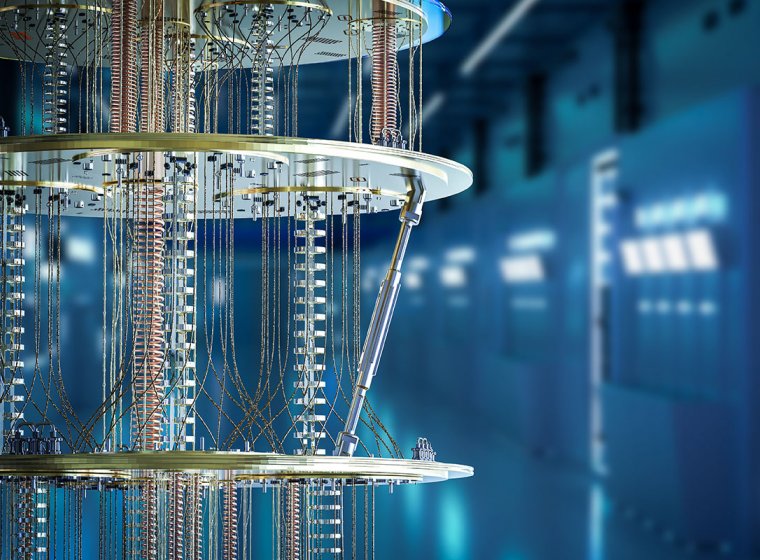
Quantum Computing: Expanding Computational Frontiers
At the heart of quantum computing are qubits, the fundamental units of quantum information. Unlike classical bits, which are either 0 or 1, qubits can exist in superpositions of states and can be entangled with one another. These properties enable quantum computers to process information in fundamentally different ways, making certain computations far more efficient than on classical machines. Research currently focuses on two major challenges: building scalable and reliable hardware, and developing the algorithms, software, and theoretical frameworks needed to make these systems useful.
In the long term, quantum computing is expected to enable breakthroughs in drug discovery, materials design, optimisation problems, and machine learning, addressing challenges that are currently intractable for classical computers.
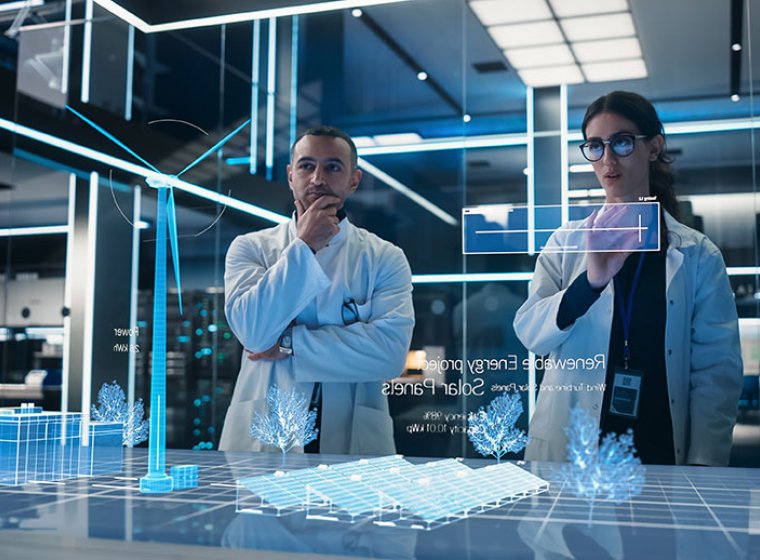
Quantum Simulation: Understanding Quantum Systems
Quantum simulation uses controllable quantum systems to model and study complex quantum phenomena. These simulators are often built using neutral or charged atoms, which naturally obey quantum laws and can be precisely controlled using lasers or electromagnetic fields. By manipulating these systems, researchers can recreate and investigate the behaviour of other quantum systems, such as molecules or advanced materials, under controlled conditions.
Quantum simulation is often considered closer to practical use, as it targets more specific problems. It is already enabling progress in areas such as chemistry, materials science, and condensed matter physics, where accurate modelling is essential.
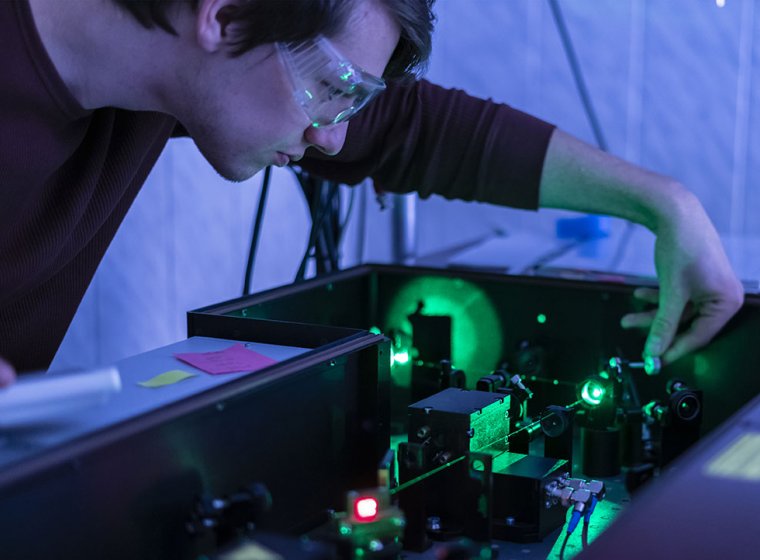
Quantum Sensing: Precision Measurements
Among all quantum technologies, quantum sensing is currently the most mature. It focuses on measuring the physical world with extreme precision. Quantum sensors use systems such as atoms or ions to detect minute changes in their environment by observing shifts in their quantum states. This enables unprecedented sensitivity in measuring quantities such as magnetic and electric fields, gravity, time, temperature, and acceleration.
These capabilities are already translating into real-world applications. Quantum sensing is enhancing navigation systems, enabling more accurate medical diagnostics, and improving environmental monitoring. Because it builds well-established quantum control techniques, many sensing technologies are already moving from laboratory research into deployment.
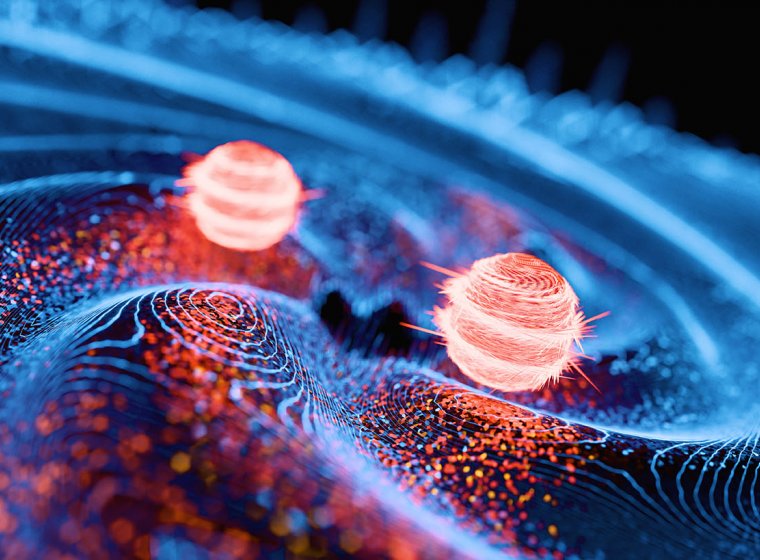
Quantum Communication: Securing the Future of Information
Quantum communication leverages quantum properties, particularly superposition and entanglement, to transmit information in fundamentally new ways. Its most prominent application today is quantum key distribution (QKD), which allows two parties to share encryption keys with security guaranteed by the laws of physics.
QKD systems are already being tested and deployed in pilot networks, marking a significant step toward secure communication infrastructures. However, the broader vision of large-scale quantum networks, capable of transmitting quantum information over long distances, is still under development. Extending communication beyond current distance limitations and integrating quantum systems into existing infrastructure remain key challenges for the field.
Looking Ahead
Quantum technologies are still evolving, with different fields progressing at different speeds. What is clear, however, is their transformative potential. By overcoming fundamental limits in computation, measurement, and security, quantum technologies are opening new pathways to address some of the most complex challenges facing science, industry, and society.
Across Europe, this progress is driven by a strong and collaborative ecosystem of research and innovation. Projects such as OpenSuperQPlus and QSolid are advancing quantum computing hardware and working towards scalable systems, while PASQuanS2 is pushing the boundaries of programmable quantum simulation and its transition towards practical applications. Complementing these efforts, QEC4QEA is helping to bridge the gap between research and real world use by building a European centre of excellence that connects users, developers, and infrastructure, and provides access to tools, training, and quantum computing resources.
Together, these efforts highlight that the future of quantum technologies will not be shaped by a single breakthrough, but by sustained research, collaboration, and the integration of different approaches. By continuing to invest in both technological development and human capital, Europe is building the foundations for quantum technologies to deliver real impact across science, industry, and society.