We use cookies on our website. Cookies help make the website more user-friendly, efficient, and secure.
Please select your cookie preferences
Strictly necessary cookies (always active)
Strictly necessary cookies are cookies required for the website to function and provide the basic information requested by the website user. These cookies are not used for tracking users.
YouTube cookies
YouTube cookies allow the playback of YouTube videos directly on our website. When YouTube cookies are used personal data or connection information, such as the IP address, may be transmitted to YouTube. By accepting YouTube cookies, you consent to the transfer of this data to YouTube. Please see our privacy policy for more information.
REDDIE – Real-world evidence for decisions in diabetes is an EU-funded initiative that aims to explore how real-world data can complement randomised controlled trials to improve the efficacy, safety, and value for money of technologies to prevent and treat diabetes.
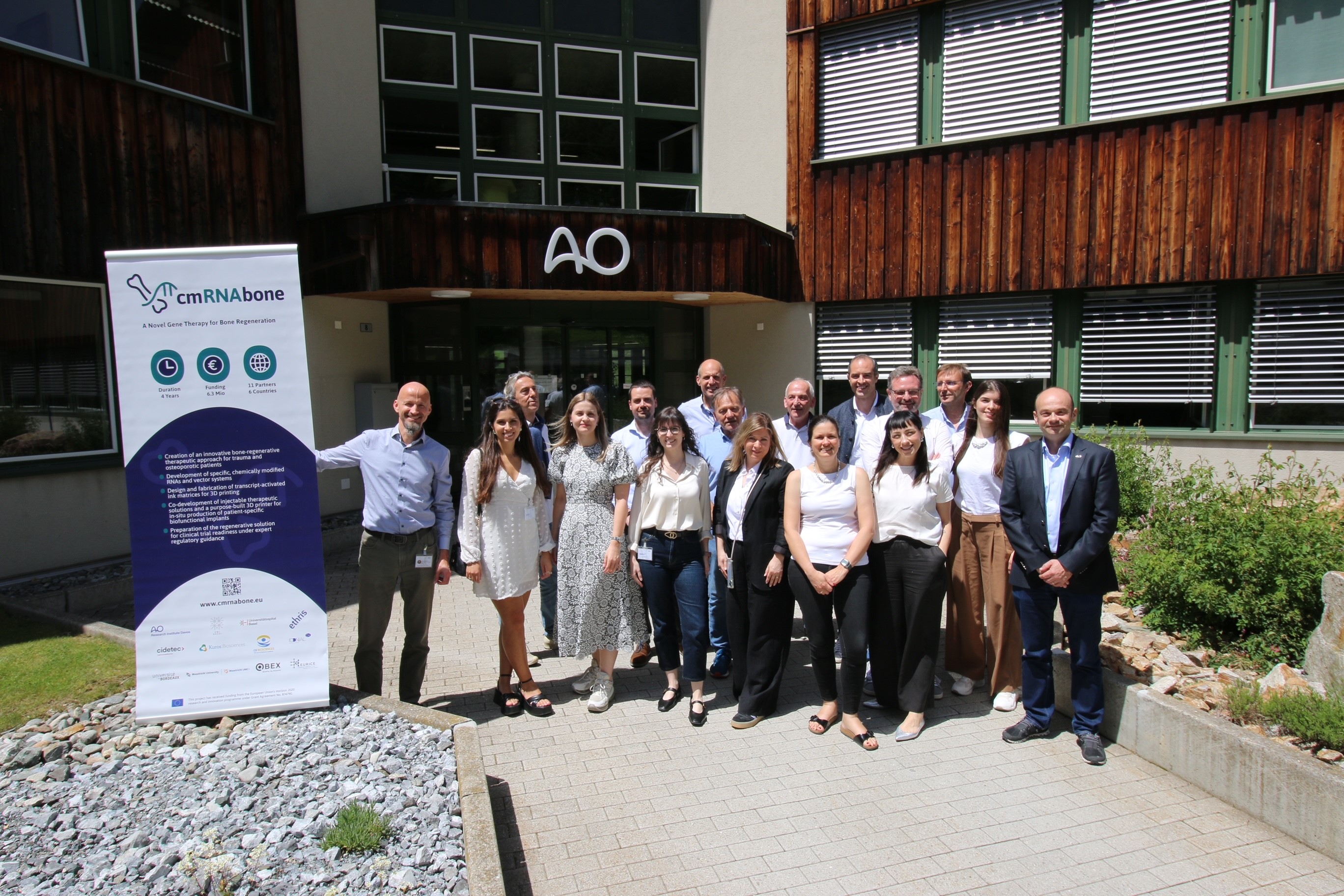
After four and a half years of dedicated research, the cmRNAbone project has successfully concluded. The final consortium meeting, hosted by the coordinating institution AO Research Institute Davos, took place in the Swiss town on June 19, 2024.
EMPHASIS is working on creating new supercapacitors (SC) that are specifically designed for consumer use. The aim is to develop sustainable energy storage solutions in two key areas that are essential for meeting the needs of modern life: electromobility and smart clothing. To achieve this goal, EMPHASIS is taking an innovative approach that involves using new materials sourced from natural resources, improving design processes, and pushing the boundaries of existing energy storage technologies. Creating successful SC cells is a complex task that requires expertise from a variety of science and technology areas. EMPHASIS is addressing this challenge by facilitating close collaboration between partners from different fields. EMPHASIS is proposing a rational design approach that optimises key components of the SC cell – electrode materials, electrolytes, and current collectors – in a way that maximises their synergy.
The European Commission has awarded INCREASE the "Grand Prize" of the EU Prize for Citizen Science 2024. Endowed with 60,000 EUR, the Prize recognises the project's impact and outstanding achievements in contributing to forging a pluralistic, inclusive, and sustainable society in Europe, and advancing our knowledge through the empowerment of civil society.
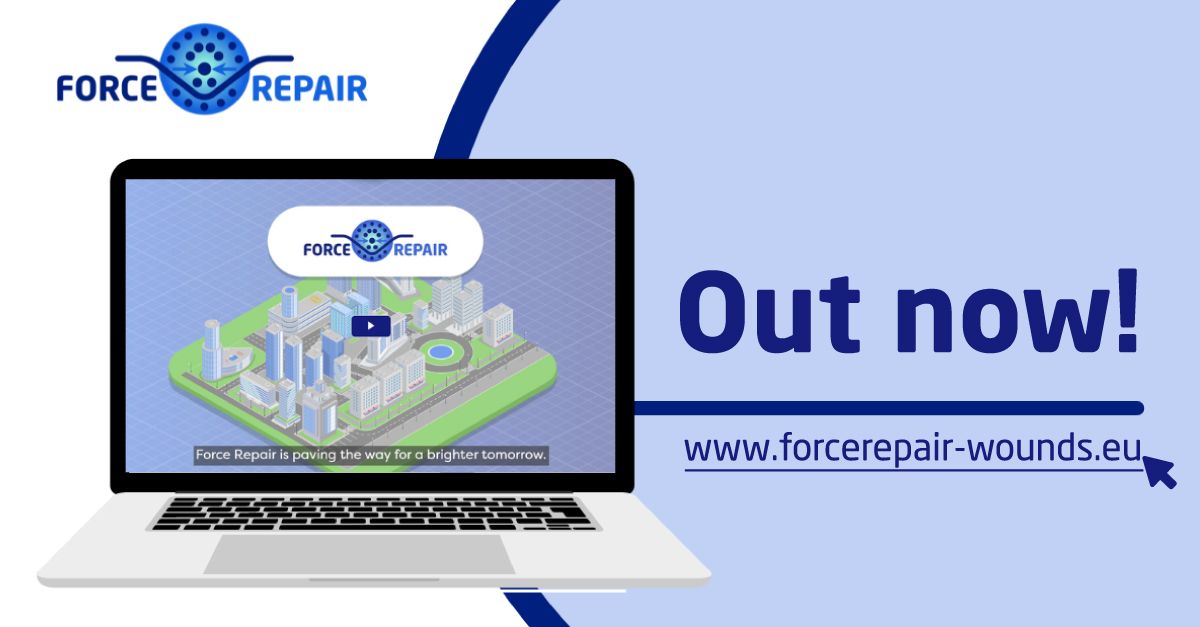
The FORCE REPAIR project aims to revolutionize the treatment of chronic wounds. A newly released video clip explores the project's innovative approach and the potentially life-changing benefits for individuals suffering from chronic wounds.
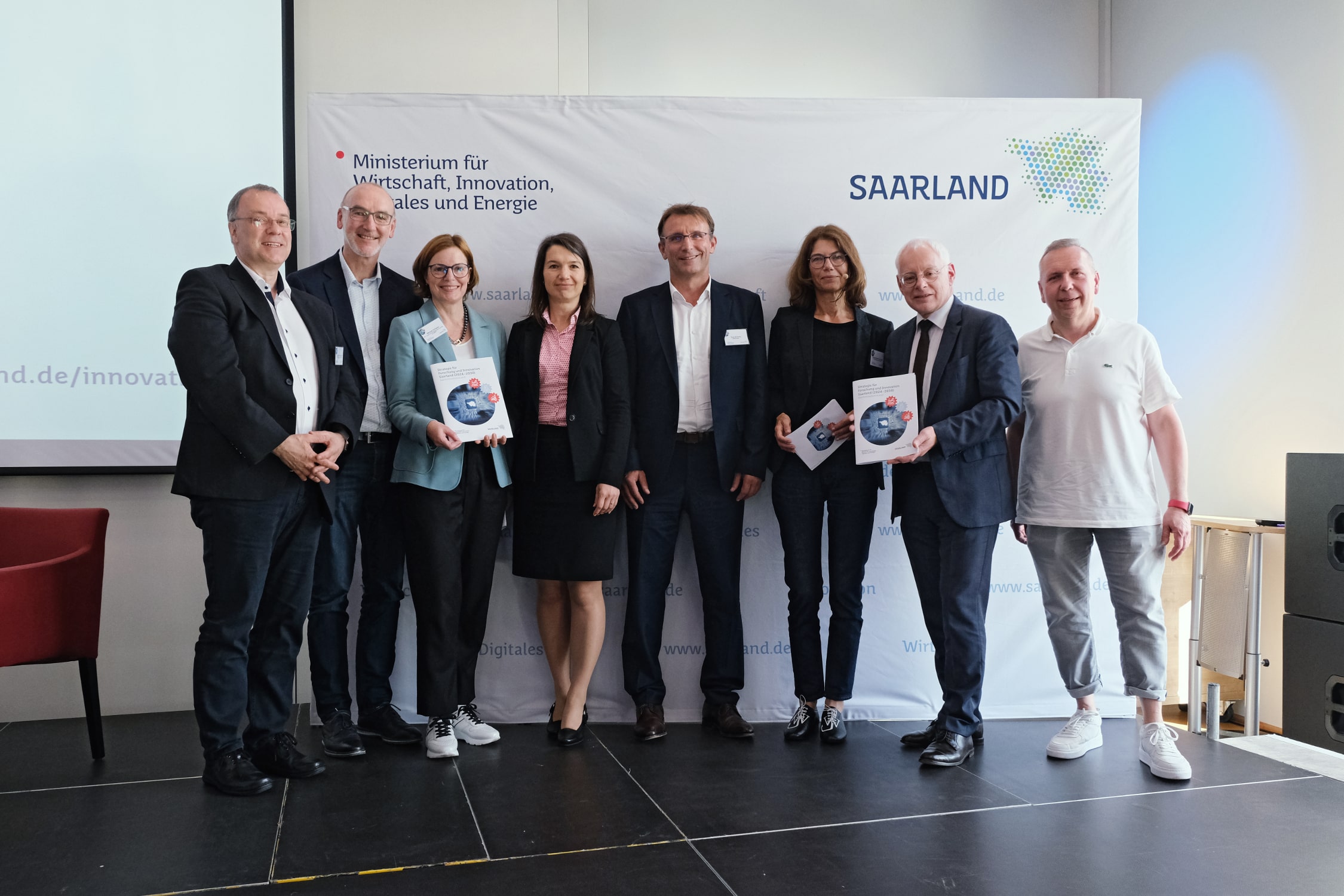
On 4 June 2024, Saarland's minister of economics, Jürgen Barke, officially introduced the new strategy for research and innovation 2024-2030 during an Innovation Summit held in Saarbrücken.
The recent approval of the European Health Data Space (EHDS) by the European Parliament at the end of April marked a significant milestone for the European health domain. The EHDS is bound to transform healthcare delivery, research, and innovation activities across the EU, driven by a clear vision: to increase citizens’ control over (and trans-border access to) electronic health records, improve coordination among European countries, and enhance health crisis preparedness. However, its implementation raises critical questions: What role can the scientific research community play in preparing for the EHDS? What actions are necessary for European countries to ensure its effective implementation? What challenges remain unaddressed in the regulation's consolidated text?
2024 is off to a strong start for Eurice. During the first quarter of 2024, we have launched eight new projects, bolstering various of our thematic project ecosystems from “Health”, to “Society”, and “Industrial Technologies”.
With over €1.6 billion only in 2023, the European Innovation Council (EIC) is the main European funding instrument for breakthrough innovators to scale up and create new markets.
In a world full of health trends, it may be difficult to understand what contributes to our well-being. The EU-funded IMMEDIATE research project is on a mission to unravel the health-to-disease transition.
On the 14 February 2024, the EU-funded project BreedingValue organised a workshop at the French National Research Institute for Agriculture, Food, and the Environment (INRAe), in Villenave d’Ornon. More than 120 researchers and breeders from Europe and beyond attended the event online and in person.
Severe cases of atopic dermatitis (AD) and psoriasis (Pso) significantly impact lives, often leading to further health complications and higher healthcare costs. Early intervention can lessen this burden, but there is currently no way to identify high-risk individuals.
On 2 March 2024, Eurice Senior Project Manager Tamara Messer presented the Horizon 2020 project INCREASE at the St. Ingbert Seed Exchange, a local event aimed to promote the swapping of regional seeds, emphasising the importance of preserving agricultural and culinary diversity. Organised by the city of St. Ingbert, where the Eurice headquarter is based, the event took place in the city’s town hall.
Between April and mid June, the German National Contact Point (NCP) Bioeconomy and Environment will offer two webinar series for interested parties who are planning to submit a proposal in the Horizon Europe Cluster 6 or the new EU Missions. In the webinar series, participants will receive helpful information and tips on various topics relating to the application process. In addition, the workshop series will deepen participants' knowledge of various application topics through interactive exercises in small groups.