
As climate change, biodiversity loss and food insecurity place growing pressure on global food systems, the European research project INCREASE demonstrates that the future of agriculture may depend as much on people and participation as on science and technology itself.
INCREASE, which has concluded after six fruitful years, focused on the preservation, study and use of the pulses common bean, chickpea, lentil and lupin. But its impact reaches far beyond agriculture. The project is helping to reshape how society thinks about food, biodiversity, scientific participation and sustainability.
At its core, INCREASE shows that protecting crop diversity is not only a scientific challenge. It is a societal one.
Supporting More Sustainable and Healthier Diets for a Changing World
Modern agriculture relies heavily on a limited number of crop varieties. While highly productive, this genetic uniformity leaves food systems vulnerable to droughts, heatwaves, pests and emerging diseases. All these risks are intensifying under climate change.
INCREASE addressed this challenge by conserving and characterising thousands of legume varieties from across Europe and beyond. For society, this means stronger long-term food security. Diverse crops provide insurance against environmental shocks and reduce dependence on a narrow agricultural base. In a changing climate, agricultural diversity becomes a form of resilience infrastructure.
Furthermore, pulses are increasingly recognised as one of the most sustainable sources of protein available. They enrich soils naturally through nitrogen fixation, reduce the need for synthetic fertilisers and generally produce a far lower environmental footprint than animal-based protein sources.
By promoting the cultivation and consumption of pulses, INCREASE contributes to Europe’s transition toward more sustainable food systems. At a time when policymakers and citizens alike are searching for ways to balance environmental sustainability with food affordability and health, pulses offer a practical and accessible solution.
Citizen Participation and Shared Responsibility for Biodiversity
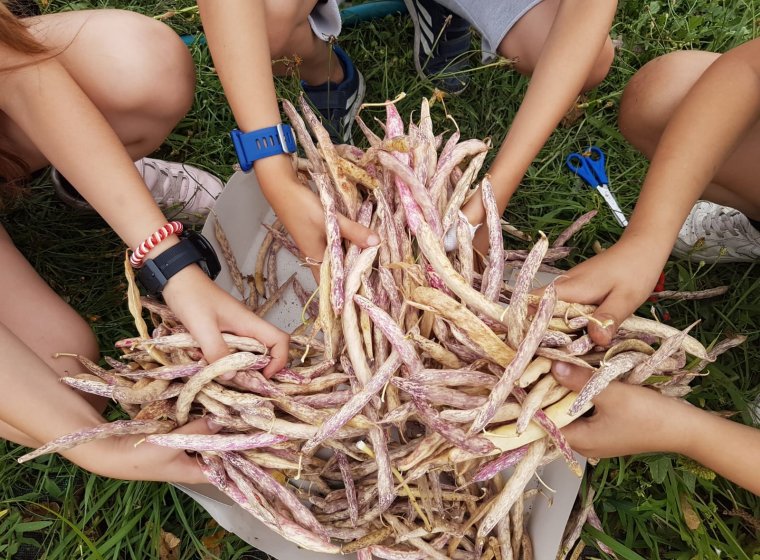
Citizen participation lies at the heart of INCREASE’s approach to biodiversity conservation and sustainable agriculture. Through its large-scale citizen science experiment, more than 27,000 people across Europe, including participants from over 600 schools, have grown bean varieties at home and in educational settings, recorded observations and contributed data via the project’s dedicated app.
The experiment has helped preserve agricultural diversity by cultivating and exchanging traditional pulse varieties that might otherwise disappear, while reconnecting communities with regional food traditions, advancing farming knowledge, and engaging a new generation with sustainable food systems and agricultural biodiversity. This decentralised approach expands biodiversity conservation beyond specialised gene banks, treating it as a shared societal responsibility embedded in everyday life.
Digital Innovation and Collaboration for a More Resilient Food Future
The project also explored new digital tools for managing agricultural genetic resources, including a web portal that simplifies access to biodiversity data. These innovations could help modernise how plant genetic resources are shared and governed internationally. More transparent and accessible systems can support collaboration among researchers, farmers and communities while making biodiversity conservation more participatory and efficient.
In this way, INCREASE contributes to more open and inclusive forms of agricultural innovation. By combining biodiversity conservation, citizen engagement and scientific research, the project has demonstrated that solutions to global challenges such as food security, climate resilience and sustainable food production can only emerge through cooperation between science and society.
To see how this is taking shape in practice, check the project’s results page.