
How can a river participate in decision-making?
At first glance, this may seem like an unusual question. Yet it captures the essence of a discussion that brought together artists, policymakers, researchers, and community representatives at the VOICE final event, The Power of Artist-Led Interventions for a Sustainable Europe, held in Brussels as an official Satellite Event of the New European Bauhaus Festival 2026.
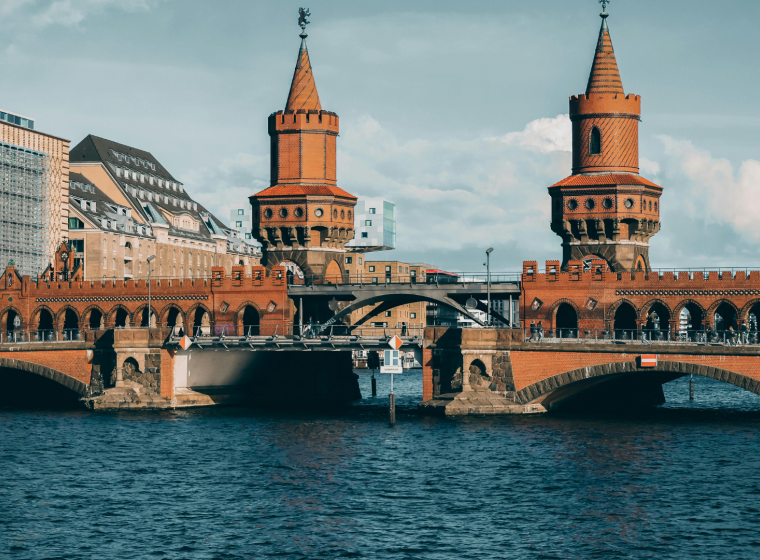
One of the projects featured during the event was RiverSync, developed by artist Jakob Kukula. The project explores how the river Spree in Berlin can be given a voice through a combination of artistic practice, citizen engagement, environmental monitoring, and digital technologies.
Using floating buoys that collect water quality data and communicate it to citizens in accessible ways, the project encourages people to reconsider their relationship with urban ecosystems and the role they play in environmental stewardship.
While the project focuses on a river in Berlin, the questions it raises are relevant across Europe. How can communities become more involved in understanding environmental challenges? How can technology support participation rather than simply collect data? And how can policymakers engage with forms of knowledge that emerge from lived experience, creativity, and local action?
These questions were at the heart of the VOICE project, which has supported twenty Art–Technology–Society Interaction (ATSI) initiatives across Europe. Working on issues ranging from biodiversity and water systems to soil health and air quality, these initiatives demonstrate how social innovation often emerges when people from different backgrounds collaborate around shared challenges.
Alongside RiverSync, several other initiatives were presented at the Brussels event as case studies of community-based innovation models. Social artist and researcher Nadja van der Weide shared insights from the Fabric of Us project, a community-based textile and storytelling project that explores belonging, reciprocity, and collective care through collaborative making. Artist and researcher Lucie Hernandez presented her project Designing E-textile Practice Samplers to Increase Participation in Clothes Repair, which works with the Ealing Repair Café community to encourage repair cultures, resource stewardship, and more sustainable consumption practices through participatory design and making. Community representative Courtney Hessey shared her experience from participating in the Futurefield project, led by artist Ruth Catlow, an initiative focused on youth engagement, creativity, and community-led approaches to environmental and social challenges.
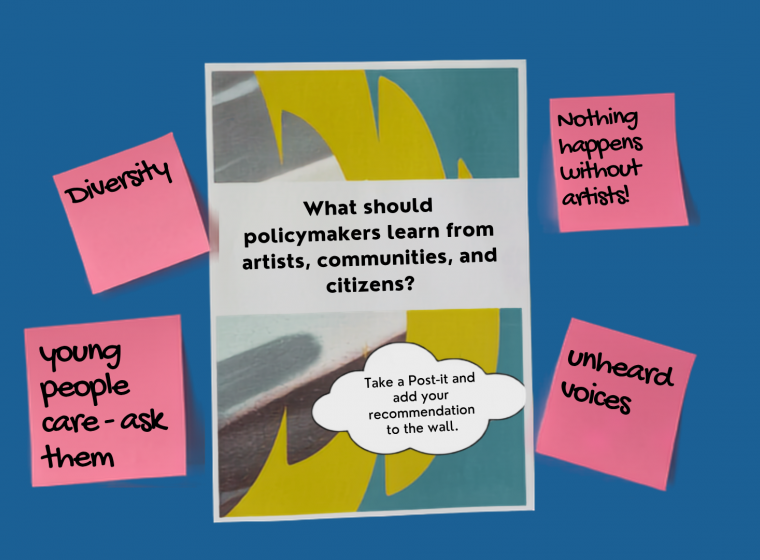
Throughout the event, participants emphasised the important role artists can play in shaping new forms of social innovation. Art has the power to bring people together, creating opportunities for developing solutions that are both evidence-based and people-centred. Yet for these solutions to achieve lasting impact, communities must work closely with policymakers to ensure that local innovation can inform and shape broader societal change.
The event also highlighted a persistent challenge within research and innovation projects: valuable knowledge is often lost when projects end. To address this, the VOICE consortium presented the pilot version of the VOICE Knowledge Platform, developed in response to 142 knowledge gaps identified throughout the project. The platform aims to preserve and share methodologies, experiences, and outcomes generated by artist-led innovation initiatives, ensuring that learning can continue beyond individual project lifecycles.
As Europe continues to navigate environmental, social, and technological transitions, the experiences gathered through VOICE suggest that that we should not be looking for a blank canvas. The future is already being sketched in communities, projects, and collaborations across Europe. The challenge is not simply to create new ideas, but to connect these individual brushstrokes into a larger picture of sustainable and inclusive change.