
Reflections on Europe’s largest decarbonisation project Power4Steel, and the need for stable investment conditions in Europe’s industrial transformation
Across Europe, companies and industrial actors are being asked to invest in new production routes, new energy systems, new value chains and new industrial partnerships. In sectors such as steel, these decisions are not small adjustments. They are long-term transformation choices that require major investment, operational risk and confidence in the political and economic framework.
This is why projects such as Power4Steel matter far beyond one single company or region. Power4Steel is the largest decarbonisation project in the European steel industry and is based in Saarland, Germany. Led by the SHS – Stahl-Holding-Saar Group, it is a central part of Saarland’s strategy to move from conventional, coal-based steelmaking towards significantly lower-emission production.
In this sense, Power4Steel stands for a broader challenge facing Europe’s industrial future: how can we encourage companies to move early towards climate-neutral production if the framework conditions around them remain uncertain – or shift?
From European ambition to industrial reality
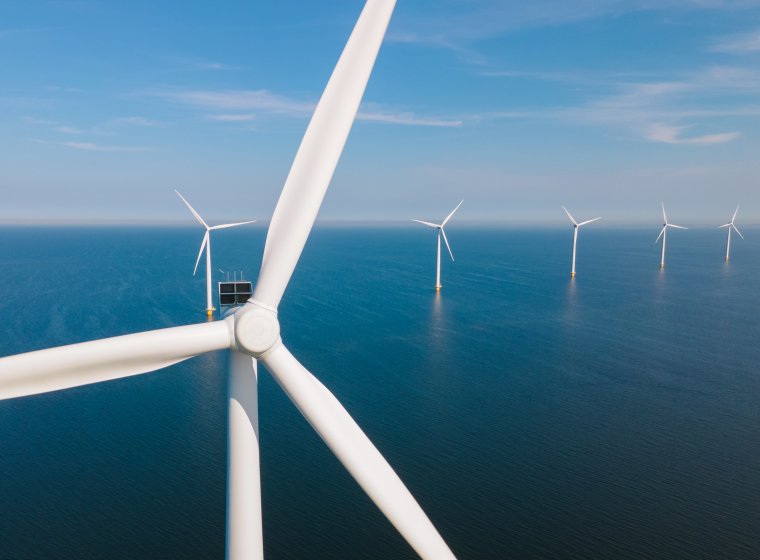
With the Clean Industrial Deal, the European Commission has made it clear that industrial decarbonisation and competitiveness must go hand in hand. Energy-intensive sectors such as steel are explicitly at the centre of this agenda, as Europe seeks to reduce emissions while strengthening resilient industrial value chains.
Germany’s research and innovation policy points in the same direction. The Federal Ministry of Research, Technology and Space (BMFTR) frames the decarbonisation of basic industries such as steel, cement, glass, ceramics and chemicals as a key challenge on the path to climate neutrality. Through programmes such as KlimPro-Industrie, research projects are developing new approaches for reducing process-related emissions, including electrification, hydrogen, alternative energy carriers, recycling and more efficient production processes.
But technology development and public funding alone are not enough. Industrial transformation only becomes investable when policy, regulation and market conditions are aligned.
As research and development initiatives are essential for the industrial decarbonisation, their long-term impact does however not stop with successful projects, validated technologies or a promising demonstrator. From an industrial perspective, the wider impact is created by going beyond the R&D and enter first use, meaning the first meaningful application of an innovative technology, process or system in a real industrial environment. First use serves then to shape actual production, investment decisions and value chains.
This is obviously a tremendous transition for industries such as steel, which require technological maturity as well as considerable capital investment, energy supply, the right skills, market demand and a stable regulatory framework.
And this is exactly why Power4Steel is a great illustration of this, as depicting the point where industrial innovation moves beyond R&D and relies on the framework conditions to enable new technologies to be sustainably implemented in real-world conditions. Public funding, clean technologies and political targets are not enough if first movers face uncertainty after taking major investment decisions.
The relevance lies in connecting R&D, validation, scale-up and industrial application and is central to how industrial technologies do create impact. On the one hand R&I steel-related projects such as MOWSES contribute to the R&D side of green steel by developing solutions around recycled steel, welding and sustainable infrastructure. On the other, Power4Steel represents the next step by moving the industrial decarbonisation towards the first use, where the technological and innovative ambitions meet the transition steps described above: real investment decisions, market conditions, regulatory frameworks. Together, these links illustrate the roadmap of collaborative projects going from developing technologies to implementing them.
CO2 certificates as part of the investment logic
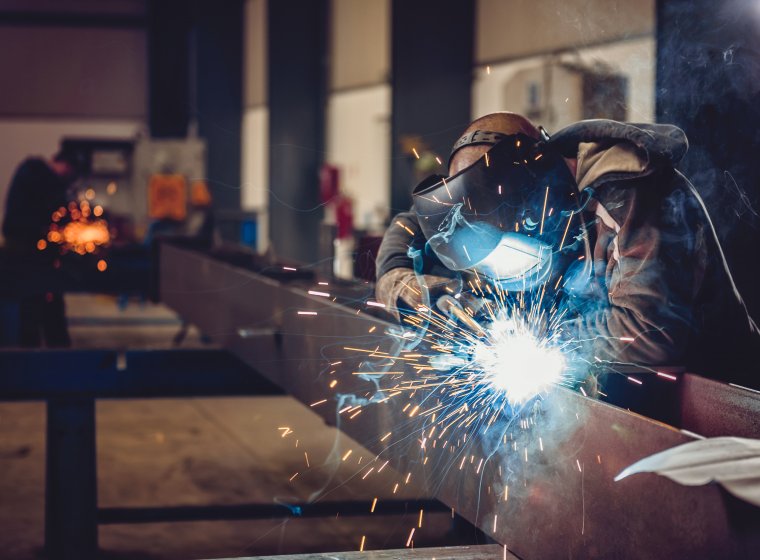
The current debate around Power4Steel shows why this matters. At its core, the debate is about whether Europe will maintain a strong and predictable CO2 price for industrial emissions, or whether political pressure will lead to a weakening, delay or softening of the EU Emissions Trading System. Under the EU ETS, companies must hold allowances for the CO2 they emit, while the total amount of allowed emissions is gradually reduced. This is meant to make climate-damaging production more expensive over time and to create an economic incentive for companies to invest in low-carbon technologies.
For industrial actors and projects such as Power4Steel, this is not an abstract policy instrument as it shapes crucial investment decisions. The project is based on the assumption that investing early in low-carbon steel production will become economically viable because CO2-intensive production will face rising costs. If the cost of emitting CO2 remains high and predictable, then green steel investments can gradually become more competitive. But if the ETS is weakened, delayed or made less reliable, conventional steel production may remain cheaper for longer. That would undermine the economic logic behind early transformation projects.
This is why the issue has become so sensitive in Saarland. Power4Steel is not only a climate project; it is also a major industrial, regional and employment project. Companies, workers and political actors have already tied major investment decisions, industrial planning and employment expectations to Europe’s decarbonisation framework. In June 2026, thousands of steelworkers demonstrated in Saarland and Berlin because they feared that possible changes to the ETS could create new investment uncertainty and endanger the ongoing transformation of the steel industry.
Can companies that moved early rely on the economic assumptions behind their investments remaining stable enough to support long-term transformation?
First movers need reliability, not uncertainty
Companies that invest early in green steel, hydrogen-based production and low-carbon industrial processes take risks before the market is fully mature. The point is not to create disadvantages for companies that are at a different stage of transformation, but to ensure that industrial actors who moved early are not put at a disadvantage precisely because they acted in line with Europe’s decarbonisation goals. The conversion to renewable production only pays off if the CO2 price rises as agreed; otherwise, the competitive advantage over fossil-produced steel disappears.
Changing the rules mid-transition sends the wrong signal. If ambitious decarbonisation projects are weakened after companies have already taken major steps, it becomes harder to convince other industrial actors to follow. The message to industry should not be that waiting is safer than acting. Europe needs actors that are willing to act early; and they need a framework that rewards and protects these initiatives.
This is especially true for steel. Green steel is not a niche. Steel remains one of the foundations of Europe’s industrial value chains: for infrastructure, mobility, energy technologies, construction, manufacturing and many other sectors. Supporting the transformation of steel production therefore means supporting both climate goals and industrial competitiveness. It is therefore both a climate and industrial policy.
Meanwhile, industrial decarbonisation cannot be delivered by industry alone. It requires strong cooperation between politics, industry, research, funding bodies and strong innovation ecosystems, from regional initiatives to European and global value chains. Technological innovation needs to be matched with coherent policy, investment security, stakeholder alignment and clear communication between all actors involved. Without this, even strong technologies and ambitious projects can struggle to create real impact.
From regional transformation to European impact
The Power4Steel case also shows that regional transformation has both European relevance and political momentum. The project is rooted in Saarland, Germany, but the questions it raises are much larger: How do we protect industrial first movers? How do we make climate-neutral production investable? How do we ensure that public funding, regulation and industrial strategy work together rather than against each other?
This is the key lesson for industrial technologies: decarbonisation is not achieved through isolated initiatives, but through a connected pathway from early-stage research and validation to scale-up, first use and industrial implementation. Lower-TRL projects create the knowledge, methods and solutions that make future transformation possible, while flagship initiatives such as Power4Steel show how these developments can move into real industrial application and create wider impact across sectors and value chains. For this pathway to work, technological ambition must be matched by reliable framework conditions. Innovation needs ambition, but industrial transformation needs reliability and cooperation.
Author: Samuel Hoefman, Portfolio-Manager Industrial Technologies, Eurice GmbH
Further reading:
- https://www.zdfheute.de/politik/deutschland/gruener-stahl-voelklingen-demonstration-emissionshandel-eu-100.html
- https://www1.wdr.de/wirtschaft/stahl-igmetall-thyssenkrupp-co2-handel-klimaschutz-100.html
- https://www.faz.net/aktuell/wirtschaft/unternehmen/saarstahl-chef-rauber-kaempft-fuer-beibehaltung-des-emissionshandels-200909117.html
- https://www.sr.de/sr/home/nachrichten/politik_wirtschaft/stahlaktionstag_voelklingen_102.html