
The latest technology insight report, published in April by the European Patent Office (EPO) and the International Energy Agency (IEA), offers a detailed look into one of the fastest-evolving frontiers of the energy transition: battery circularity. Analysing two decades of data, the report sheds light on the big players and main locations of patenting, while highlighting emerging trends in technology categories receiving the most innovation attention.
Patents are often seen as early indicators of industrial transformation, which would put battery innovation at the centre of technological change. Energy storage technologies accounted for 40% of all energy-related patenting in 2023 and are projected to approach 50% in the coming years. Battery circularity, which covers recycling, reuse and recovery of materials, is at the center of this innovative field. Since 2017, patenting activity in this domain has grown at an annual rate of 42%, far outpacing both battery manufacturing (16%) and overall technological innovation (2%).
2017 also marked a turning point for electric mobility, with global electric car sales surpassing one million units. Today, electrification is accelerating rapidly: more than one in four cars sold globally in 2025 is electric. This shift is reshaping both energy demand and industrial systems, but it also raises pressing questions. By 2030, around 1.2 million electric vehicle batteries are expected to reach end-of-life, rising dramatically to 14 million by 2040. Managing this wave of used batteries is not only a waste challenge, but also a strategic opportunity.
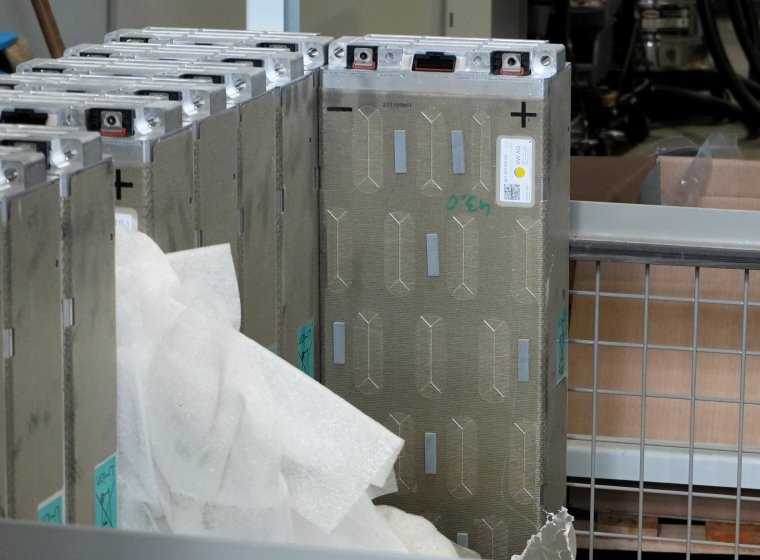
Europe’s Strength: Recovery and Recycling
While Asia currently dominates the field, accounting for 63% of global battery circularity patents in 2023, Europe is steadily building a presence across the value chain. European applicants are particularly active in the collection and processing of used batteries and in advanced material recovery. Major industrial players are driving innovation in converting recycled materials into new battery components. However, the report also points to structural challenges. Recycling systems remain fragmented, battery designs are often heterogeneous, and automation levels are still limited. Scaling up technologies and improving cost efficiency will be critical if Europe is to compete globally.
Circular Innovation as a Strategic Imperative
Battery circularity is not simply a matter of technological leadership, but of economic resilience and strategic autonomy. As demand for batteries continues to surge, access to critical raw materials is becoming a defining factor for industrial competitiveness. Expanding circular solutions offers Europe a pathway to reduce dependence on imports while securing a more stable and sustainable resource base.
At the same time, efficient recycling systems can significantly lower the environmental footprint of battery production, while also opening up new economic opportunities across the value chain. However, realising this potential requires overcoming persistent challenges, including high processing costs, fragmented waste streams and the growing complexity of battery designs. Scaling up innovative solutions and improving system integration will be essential to ensure that circularity becomes economically viable at large scale.
In this context, EU-funded research is a central mechanism shaping the direction and speed of technological progress. Under Horizon Europe, projects are increasingly designed to address the full battery lifecycle in an integrated way, linking materials development, manufacturing processes and end-of-life solutions within a single framework.
A concrete example is the INERRANT project for the development of safer and recyclable lithium-ion batteries. It targets the entire lifecycle—from novel materials and advanced electrolytes to eco-friendly recycling processes—while explicitly aiming to reduce dependence on critical raw materials and enable scalable industrial uptake.
Looking ahead to the next Framework Programme (FP10), early discussions indicate a further shift towards industrialisation, resilience and strategic autonomy. This is likely to translate into more tightly scoped calls, clearer impact requirements and stronger links between research outcomes and industrial investment. Circularity is expected to become a core design principle rather than a standalone topic, integrated across calls on materials, manufacturing and energy systems.
Read the full report here.