 Industrial Technologies
SUPERLASER
Paving the Way for a New Generation of Laser Technologies


At a Glance
- New generation of high-performance, sustainable laser technologies: ultra-narrow lasers using halide perovskite crystals
- First ever laser based on superradiance phenomenon
- Reduce dependency on critical raw materials through sustainable device design and recycling protocols
- Revolutionise laser technology for use in advance technologies such as quantum computing and gravitational wave detection

Ultra-narrow Light for Advanced Technologies
Advanced laser technology is needed for many breakthrough technologies: from quantum computing to atomic clocks, particle cooling and gravitational wave detection. What these technologies have in common is that they use stable and spectrally pure light of very narrow bandwidth. And by narrow we mean the width of an atom.
Today’s state of the art lasers face several limitations: bulky design, costly materials and sensitivity to thermal noise and they produce a lot of e-waste. SUPERLASER is addressing this need by developing a new kind of laser that is not only highly precise, but also more affordable, sustainable and easier to produce. By rethinking both the materials and the design, the project is laying the foundation for next-generation laser systems that meet the needs of cutting-edge technologies, without polluting the planet.

The Superradiance Effect: Pushing the Boundaries of Traditional Physics
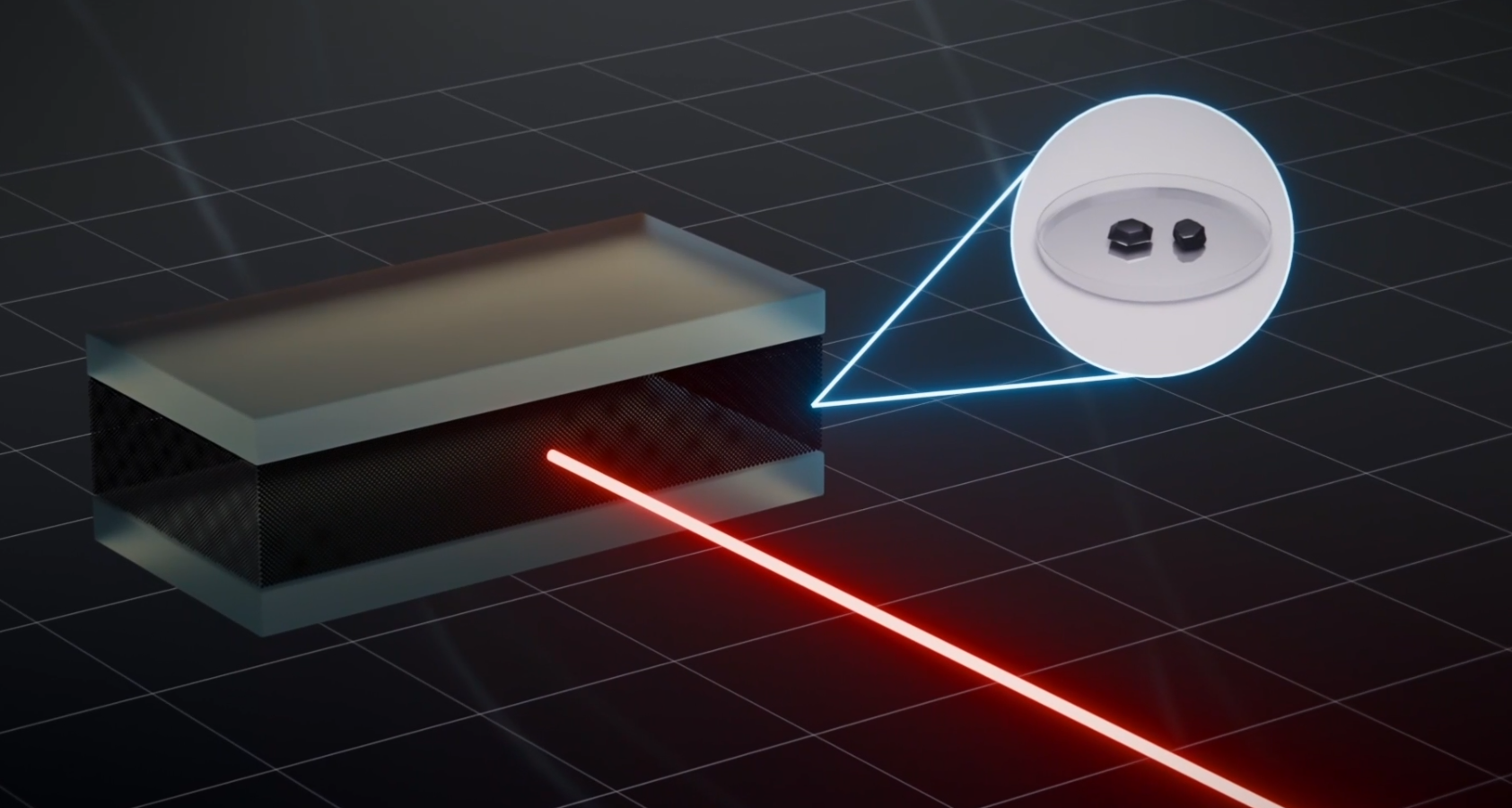
SUPERLASER is developing ultra-precise lasers using halide perovskite crystals, innovative materials that are sustainable, efficient and affordable. These lasers pushing the boundaries of traditional physics by making use of a phenomenon called superradiance. Superradiance is achieved when all molecules emit light collectively in a highly coordinated way, producing an intense and extremely narrow beam of light.
SUPERLASER will design and test these materials at the atomic level, predict their behaviour using advanced simulations, and fabricate layered superlattices to enhance their optical properties. The team is also developing methods to recycle all components of the devices, ensuring zero electronic waste. The result will be the first electrically pumped perovskite laser that works at room temperature, marking a major leap toward cleaner, more powerful light sources for the future.