 Health
INTERCEPT
Pioneering a Future Without Crohn’s Disease


At a Glance
- Collaboration across Europe, North America & South Korea
- Validating biomarkers to detect Crohn’s in the pre-clinical phase
- Launching Europe’s first-ever prevention study in healthy first-degree relatives

Stopping Crohn’s Before It Begins
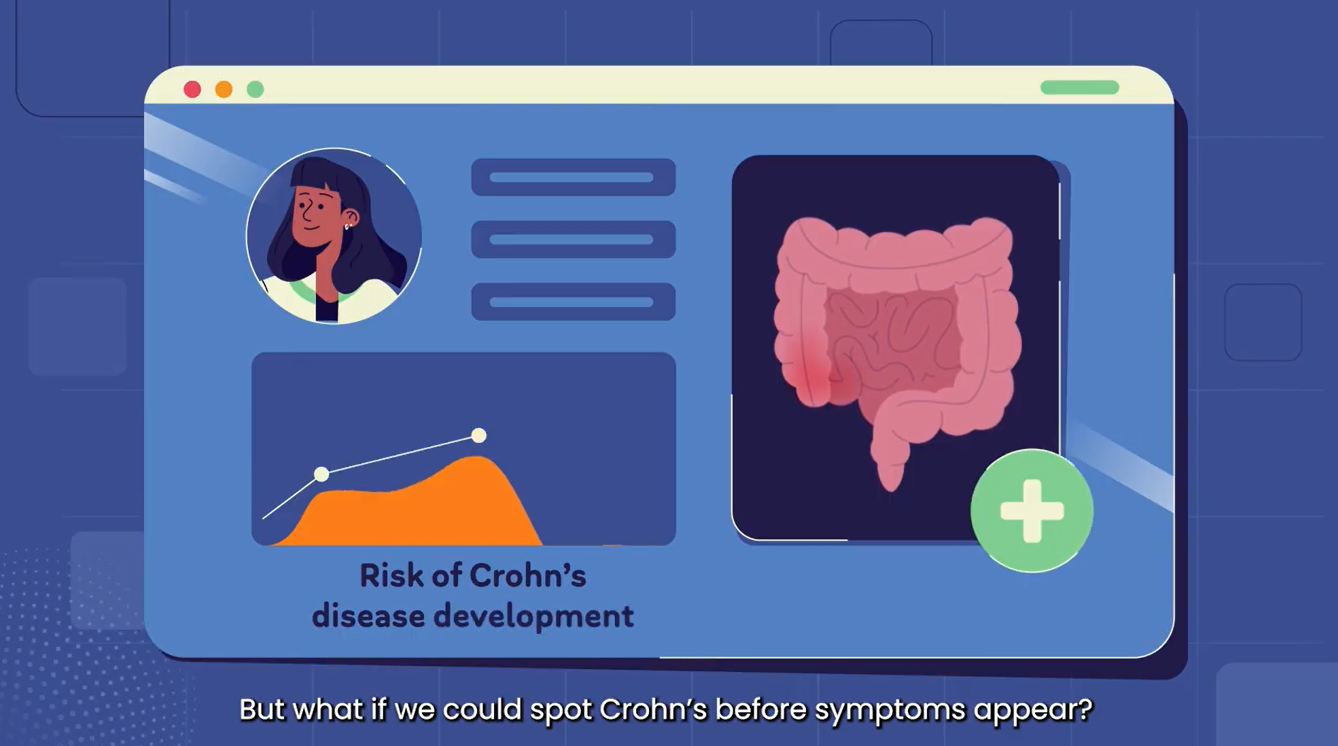
Despite advances in therapies, nearly 50 % of patients require surgery within ten years of diagnosis and only a minority, around 10%, experience prolonged remission. Recent science has shown that Crohn’s begins long before symptoms appear during a “silent” preclinical phase where inflammation can brew undetected. Biomarkers - measurable substances found in body fluids that can signal the presence of the earliest stages of the disease before it clinically manifests - offer a way to catch disease early, but to date, none have been validated for Crohn’s disease across large, diverse populations.
INTERCEPT aims to change this through two first-of-their kind studies in Europe with first-degree relatives of people living with Crohn’s disease. The aim is to validate robust biomarkers as well as to develop a blood risk score to identify individuals at risk before symptoms develop. This would lead to a paradigm shift not only in CD, but potentially other chronic inflammatory diseases changing the narrative from treatment to prevention.

From Biomarker Science to Prevention Study
In building upon the research and use of biomarkers in signalling the presence of the earliest stages of diseases before they manifest in inflammatory conditions such as Type 1 Diabetes and Rheumatoid Arthritis, the INTERCEPT project aims to verify and clinically validate a panel of biomarkers and build a blood risk score that can identify individuals with a high risk of developing CD within five years after initial evaluation.
The project will recruit 10,000 healthy first-degree relatives of individuals with CD from seven European countries to further validate the biomarkers and risk score. From this group, 80 with the highest risk of developing CD will take part in an innovative trial aimed at preventing full-blown disease development through an established and highly effective medical treatment. This early detection and prevention method has the potential to revolutionise the way we understand and treat CD. It would enable healthcare professionals to diagnose the disease early on, potentially keeping it from progressing to debilitating stages.