 Health
AIDAVA
Transforming How we Collect, Clean, and Use Personal Health Data with AI-powered Solutions

At a Glance
- Curating personal health data using AI-powered tools and metadata orchestration
- Building Personal Health Knowledge Graphs (PHKGs) for integrated, reusable records
- Empowering patients to manage and clean their own health data
- Enabling FAIR data sharing via trusted intermediaries under the EU Data Governance Act
- Tested in real-world cases: breast cancer registries and cardiovascular monitoring
Empowering Citizens and Health Systems with Clean, Connected Data
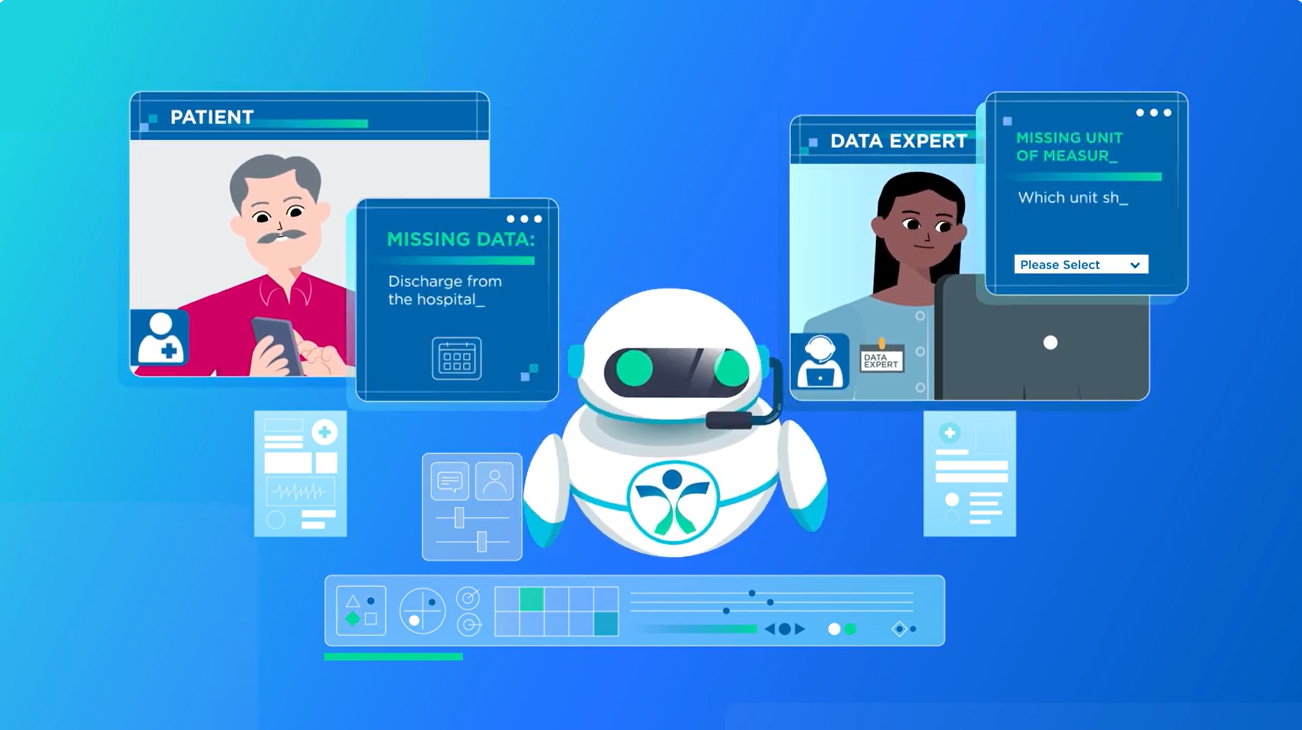
Today’s health data is scattered across institutions, locked in silos, or buried in paper forms and narrative texts. This fragmentation not only limits patients’ control over their own records but also hampers preventive care, personalised treatment, and clinical research. Manual curation is time-consuming, expensive, and requires expert knowledge—making personal health data largely inaccessible for reuse. AIDAVA tackles this challenge head-on by introducing an AI-based orchestration engine that automates the integration and standardisation of health data. The project engages patients as active participants in the data curation process, supported by a conversational AI assistant, bridging the gap between technical systems and individual data literacy. AIDAVA ensures that clean, standardised, and shareable data becomes the norm, not the exception.
Orchestrating AI Tools and Patient Insight for Semantic Interoperability
AIDAVA's solution is built around four key pillars:
- Metadata capture: Each data source is tagged with rich metadata (FAIR and content-specific) to guide processing
- AI tool orchestration: AIDAVA integrates and coordinates multiple tools—OCR, NLP, entity deduplication, semantic/syntactic transformation, feature extraction—to automate the curation pipeline
- Personal Health Knowledge Graphs (PHKGs): Every individual’s health data is harmonised into a PHKG, aligned with international standards like SNOMED, HL7 FHIR, and LOINC
- Patient engagement: Patients are supported by a conversational AI assistant designed to help them understand, curate, and consent to share their data
The approach is tested in two real-world scenarios:
- A federated European breast cancer registry across three languages
- A cardiovascular disease monitoring system for patients at risk of myocardial infarction
These pilots will demonstrate how citizen-driven data governance and AI-powered automation can reshape healthcare and research alike.